Concept prototype, not the official SGL website
SGL logo Sander Geophysics SGL · Ottawa · Est. 1956

Health and Safety

Health and Safety

Safety is taken very seriously at SGL and is always a primary factor in any decision. SGL currently owns and operates one of the largest fleets of geophysical survey aircraft.

15M+

Line kilometres of survey data

150,000+

Hours of survey flying

0

Aircraft accidents or serious injuries

1956

Record runs since

The system behind the record

SGL has developed and implemented a Safety Management System (SMS) and comprehensive Health, Safety and Environment (HSE) policies that govern all aspects of company operations. The published procedures are drawn from the company Air Operator Certificate, Flight Operations Manual, Standard Operating Procedures Manual, Maintenance Control Manual, Emergency Response Plan, Health, Safety, and Environment Policy Manual and the IAGSA Safety Policy Manual.

SGL is a founding and accredited member in good standing of the International Airborne Geophysics Safety Association (IAGSA), which promotes the safe operation of helicopters and fixed wing aircraft on airborne geophysical surveys, and an active executive member.

Safety initiatives include project-specific Aviation Risk Analysis (ARA) and Personnel Risk Analysis (PRA) for all surveys, real time satellite tracking of SGL aircraft, HSE and first aid training for all field personnel, low-level flight training and aircraft simulator training for pilots, and advanced safety training appropriate to the location, such as water egress and wilderness survival.

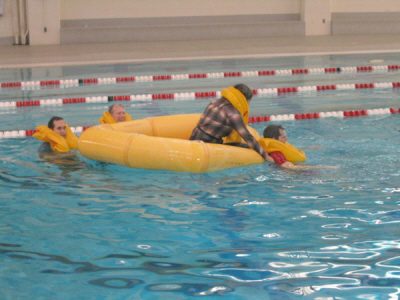
SGL staff participating in a water egress training course
SGL staff participating in a water egress course. Photo: SGL.

Flight operations

How surveys are flown

Each flight crew consists of two pilots who share handling duties to mitigate fatigue, using checklists, standard calls and the SOP Manual. Before a survey, a detailed risk analysis on the IAGSA model is approved by management and briefed to the crews. Operations are conducted under Visual Flight Rules in daylight as standard, with duty limits observed on every project: a maximum of 14 duty hours in any day, and flight time maxima of 60, 120 and 300 hours in any 7, 30 and 90 day period.

Flight following

Tracked, called in, accounted for

For each flight, the crew files a company Operational Flight Plan with an assigned flight follower before departure. The crew reports position, line number and aircraft status at intervals not exceeding one hour; a missed pair of calls initiates search and rescue procedures under the Emergency Response Plan. Only essential crew fly; there are no passengers on survey flights. Dangerous goods, as defined by IATA, are not carried.

Engineering

Maintenance under AMO authority

All aircraft are flown and maintained by permanent SGL employees, in the field and at head office. Maintenance follows the manufacturers recommendations and the Maintenance Control Manual under the company Approved Maintenance Organization, with special inspections on survey equipment and stress areas, weekly maintenance reports to headquarters, and fuel quality control checked by the AME and the captain before delivery to the aircraft tanks.

People

Crews are the safety record

SGL attributes its excellent safety record to the quality and experience of its survey crews, combined with management ongoing commitment to safety. Most SGL pilots have completed the Flight Safety course for the aircraft they fly, including ground school and flight simulator training, and every crew member carries a personal EPIRB and smoke hood, with survival equipment matched to the geography and season of each survey.

Next step

The fleet these procedures protect

Twelve aircraft, three types, one maintenance organization: the aircraft pages carry the full spec sheets.